
Sole prop stack · Post 01
Three cards, three apps: my Canadian spending stack
May 26, 2026 · 8 min read
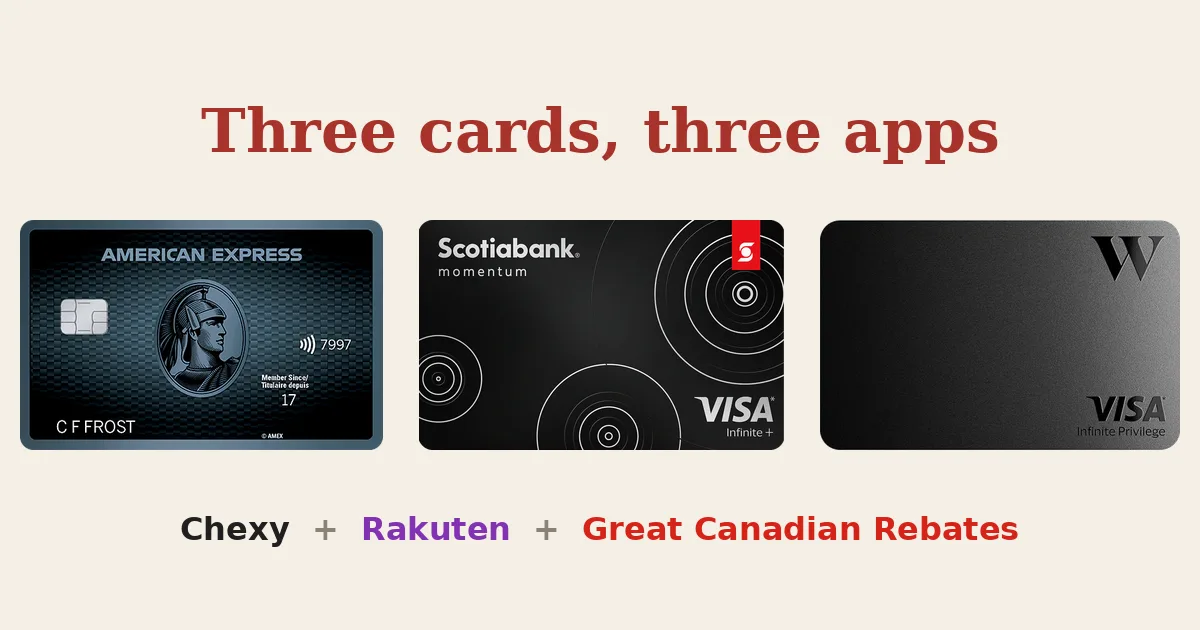
Three credit cards, three cashback apps, and the math behind the stack I run.
If you put everything on one credit card, you're probably leaving $1,000+ a year on the table.
No single card wins every category. Matched to the right spend, the bonus cards earn four to five times what a basic 1% card does, and one of them drops the 2.5% foreign exchange fee to zero. Three apps add another layer on top.
This post contains affiliate links. The Cobalt and Momentum links route through Great Canadian Rebates, where you get the card's welcome bonus plus a GCR cashback rebate. The Wealthsimple, Chexy, and Rakuten links are direct referrals. Full disclosure at the bottom.
At a glance
The three cards, with the single highest-impact category for each:
- American Express Cobalt: 5% back on eats and drinks
- Scotia Momentum Visa Infinite+: 4% cashback on recurring bills, groceries, and subscriptions
- Wealthsimple Visa Infinite Privilege: 2% flat cashback on everything else, 0% foreign exchange
And the three apps that layer on top:
- Chexy: Put rent, tuition, and other payments you can't normally card onto Momentum, coded as recurring for 4%.
- Rakuten Canada: Cashback portal for everyday online shopping. Click through, earn on top of your card.
- Great Canadian Rebates: A cashback portal too, but the one I use to open new cards: a rebate on top of each welcome bonus.
The layers
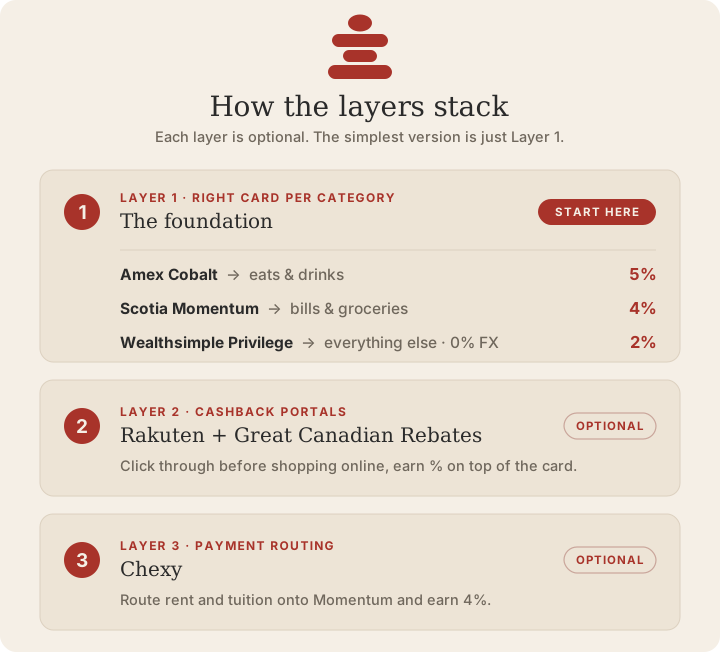
This stack has layers. You can adopt as many or as few as you want.
Layer 1: Right card for the category. Routing food to Cobalt, recurring bills to Momentum, everything else to Privilege. Just changing this routing is most of the gain.
Layer 2: Cashback portals. Rakuten and GCR sit between you and the merchant. Click through their portal first, get a percentage back on top of whatever your card earns.
Layer 3: Payment routing. Chexy turns payments you normally can't put on a credit card, like rent and tuition, into a card transaction that Scotia Momentum codes as a recurring bill. That's 4% on money that would otherwise earn nothing.
Each layer is optional. The simplest version is just Layer 1.
The three cards
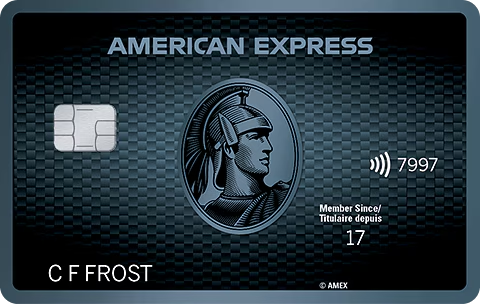
American Express Cobalt: eats and drinks
The famous one.
- 5% back on eats and drinks (5x Membership Rewards points): restaurants, bars, grocery stores, food delivery, on up to $2,500 a month.
- Fee: $15.99/month, or $191.88/year, after Amex's November 2025 increase.
- Welcome bonus: up to 15,000 MR points for spending $750/month across year one. At least $150 as a statement credit, more if you transfer to Aeroplan.
- GCR rebate: $40 on approval.
Apply for the Amex Cobalt through GCR →
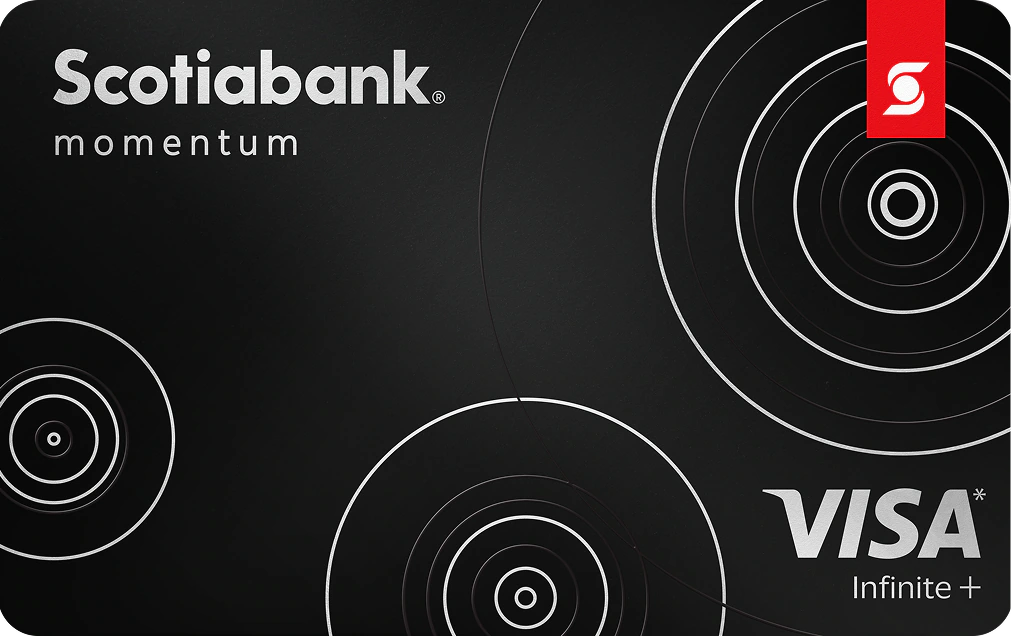
Scotia Momentum Visa Infinite+: recurring bills and groceries
The workhorse of the stack.
- 4% cashback on recurring bills, groceries, and subscriptions: hydro, phone, internet, streaming, insurance, anything on a schedule, on up to $25,000 a year combined.
- Fee: $120/year, with the first year waived on new applications between May 1 and November 1, 2026.
- Welcome bonus: 15% back on your first $2,000 of eligible purchases in three months, up to $300.
- GCR rebate: $100 on approval.
Paired with Chexy (in the apps section), Momentum also codes rent, tuition, and CRA payments as recurring bills at 4%. That pairing is what makes it the center of the stack.
Apply for the Scotia Momentum Visa Infinite+ through GCR →
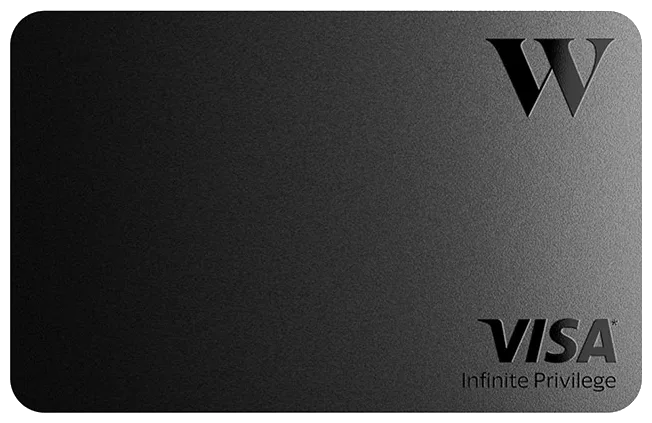
Wealthsimple Visa Infinite Privilege: everything else
The backstop, for US-dollar purchases, anything past the other cards' caps, and whatever doesn't fit Cobalt or Momentum.
- 2% flat cashback on everything, with a 0% foreign exchange fee. Most Canadian premium cards charge 2.5%, so $5,000 of annual USD spend keeps $125 in your pocket.
- Fee: $240/year, waived at $100k+ across your Wealthsimple accounts, $500k+, or $4,000+/month in qualifying direct deposits.
- Pairs with Wealthsimple Cash: the same tiers lift its interest rate to 1.25%, 1.75%, or 2.25%, on money you can spend any time.
Sign up through my Wealthsimple referral and you get a cash bonus when you fund the account.
The three apps

Chexy: rent on a credit card, coded as recurring
Chexy is a Canadian fintech that lets you pay rent, tuition, taxes, and bills with a credit card. They charge your card on the front end and pay the recipient on the back end via Interac e-Transfer, PAD, or bill pay.
The mechanic that matters: credit cards code Chexy purchases differently depending on the card. Scotia Momentum codes them as recurring bills, which means the 4% rate applies. Not every card does this, which is part of why Momentum sits at the center of this stack.
Chexy currently charges 1.75% of the payment as a fee. That rate drops with referrals, down to 0.5% at the top tier.
The math, with hypothetical numbers.
Someone paying $2,000/month in rent, routed through Chexy onto Momentum:
- $2,000 × 12 = $24,000/year, just under the Momentum $25k recurring-bills cap
- 4% cashback on $24,000 = $960/year
- Chexy fee at 1.75% × $24,000 = $420/year
- Net: $540/year on a payment that normally earns nothing
With Chexy referrals dropping the fee to 0.5%, that net climbs to roughly $840/year.

Rakuten Canada: cashback portal for online shopping
Rakuten handles the everyday shopping: about 750 stores in the catalog including Old Navy, Sephora, Crocs, Oakley, Foot Locker, Aldo, HP, Lenovo, and Sony.
Click through Rakuten's portal before shopping, get a percentage of the purchase back as cashback, paid out quarterly as cash or gift card.
My lifetime cashback through Rakuten is $684.37. Most quarters I get $30-80 without thinking about it on purchases I would have made anyway. If you want in, my referral link is here.

Great Canadian Rebates: the way I sign up for cards
GCR is the other cashback portal in my stack, and the one I lean on for opening cards. It overlaps with Rakuten on some stores and adds others, including travel bookings, but its real value is credit card sign-ups: it pays cashback on them. The Cobalt and Momentum links in this post route through GCR. Apply through those links and you get the card's welcome bonus and a GCR rebate, two separate payouts for one application. If you just want the portal without a card application, sign up for GCR directly.
Where this stack doesn't work
Not enough category spend to clear the fees. The Cobalt's $192/year fee needs roughly $6,400/year of eats and drinks to break even against a flat 2% card. The Cobalt earns 5% on food and the Privilege earns 2%, so the gap that actually pays for the fee is 3 points, not the full 5%. If your food spend is below that, drop the Cobalt and put food on the Privilege at 2%.
The Privilege's fee isn't always waived. The stack treats the Wealthsimple Privilege as a clean 2% back with no foreign exchange fee, and that only holds if its $240 annual fee is waived. The waiver needs $100k held across your Wealthsimple accounts, or $4,000+/month in qualifying deposits (the full conditions are in the Privilege section above). If you don't clear that bar, the $240 comes out of your 2% and your FX savings before you're ahead, and the Privilege has to justify itself on your total spend, not just the slice that lands on it in this stack. Check that the waiver applies to you before treating that 2% as free.
Income or credit instability. These are premium-fee cards that assume reliable income and clean credit. Canadian applications generally let you count household income, not just your own, which helps if your self-employment income is lumpy. But if you're actively rebuilding income or credit, a no-fee 2% cashback card is the more sensible starting point.
What's next
This stack covers the basics: routing everyday spending through the right cards and stacking portals on top. More to come, things like business credit cards for the self-employed and optimizing for travel rewards instead of cashback.
Subscribe to the newsletter if you want the next one in your inbox. And if you spot something I got wrong in the math, email me at maplecairn@gmail.com.
Disclosures
The Amex Cobalt and Scotia Momentum links in this post route through Great Canadian Rebates. Apply through those links and you get the card's welcome bonus plus a GCR cashback rebate, and I earn a referral commission. The Chexy, Rakuten, and Wealthsimple links are direct referrals: I earn a commission and you get a referral bonus.
None of this changes which cards I recommend or the math I show. Full affiliate breakdown is at /affiliate-disclosure.
I'm not your accountant or financial advisor, and this is educational content, not financial or tax advice. Card terms shift constantly, so read the actual program terms before applying. The math uses hypothetical numbers; your situation may differ.